Dusty Blue Floral Tumbler Wrap: A Designer's Review
As a designer who spends more time staring at stitch maps than most people spend watching television, I approach every new digital embroidery file with a mix of excitement and skepticism. We have all been there: you buy a beautiful graphic, convert it, and end up with a puckered mess on a client's favorite sweatshirt. So, when I came across the Dusty Blue Floral Embroidery Tumbler Wra, my first instinct wasn't to rush to the checkout. It was to analyze whether this asset could actually survive the transition from a screen to a needle.
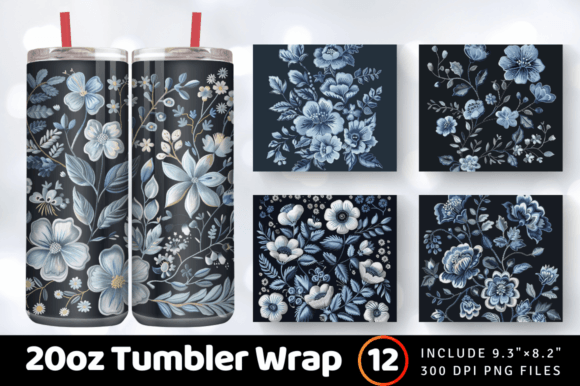
The product description labels this as a sublimation design for 20 oz skinny tumbler wraps, specifically noting it comes in a straight-wall format within a high-resolution zip file. While the source material is categorized under Tumbler Wraps and Graphics, my job is to look past the intended use and see the potential for machine embroidery design applications. Can a floral motif designed for printing hold up when translated into thread? Let's dig into the practical realities of using this design in a real-world craft business.
First Impressions: Mood and Visual Personality
The immediate appeal of the Dusty Blue Floral Embroidery Tumbler Wra lies in its color story. "Dusty blue" suggests a muted, sophisticated palette that moves away from the primary colors often found in budget-friendly clip art. This specific hue creates a calming, vintage-inspired mood that fits perfectly with current trends in boutique branding and modern farmhouse decor.
Visually, the layout appears organic. Floral designs intended for cylindrical objects like tumblers often feature a flowing composition to wrap around the curve. When flattening this concept for embroidery, that flow translates beautifully into horizontal arrangements suitable for tote bags or vertical stacks ideal for apron bibs. The level of detail seems moderate; it isn't so intricate that it will vanish on a textured towel, nor is it so blocky that it lacks elegance. For an Etsy seller looking to elevate their handmade product lineup, this visual personality offers a sense of professionalism without feeling overly corporate.
Real-World Application: From Screen to Stitch
To truly test the viability of this design, I imagined a specific scenario: a custom order for a bridal party gift set. The client wanted coordinated items that felt cohesive but not identical. Here is where repurposing a graphic like the Dusty Blue Floral Embroidery Tumbler Wra shines.
While the original file is a PNG meant for sublimation, using it as a reference trace or converting it (if vector data is available or if you redraw it based on the high-res image) allows for incredible versatility. Picture this design executed as a satin stitch border on a linen napkin set. The dusty blue threads against natural beige fabric would create a stunning contrast. Alternatively, imagine scaling it down for a baby embroidery project on a onesie. The soft tones are gender-neutral enough for any nursery, avoiding the harshness of bright blues.
For those running a small shop, this design could anchor a "Blue Botanical" collection. You could apply it to:
- Tote bag designs using a dense fill stitch for durability.
- Sweatshirt embroidery on the chest pocket for a subtle accent.
- Embroidered patches that can be ironed onto denim jackets or caps.
- Holiday embroidery gifts, perhaps paired with silver metallic thread for a winter theme.
The key here is adaptability. A design that works only for one specific item is a single-use asset. A design that inspires a whole range of custom apparel and home goods is a business builder.
Technical Considerations and Fabric Compatibility
Now, let's get into the nitty-gritty that separates hobbyists from pros. If you are planning to digitize this image or use a converted version for commercial embroidery, you must consider the substrate. The original description mentions "straight wall" tumblers, implying a flat projection of the art. This is good news for embroidery, as it means the design likely doesn't rely on extreme distortion to look right.
However, caution is required regarding stitch density. Floral designs often tempt digitizers to pack in too many leaves and petals. On stretchy fabrics like jersey knits or thin performance tees, a high-density floral pattern can cause puckering and stiffness. If you are working with the Dusty Blue Floral Embroidery Tumbler Wra concept on a t-shirt, I recommend simplifying the inner details. Use running stitch outlines for delicate petals instead of solid fills to keep the fabric draping correctly.
Textured fabrics present another challenge. A waffle-weave kitchen towel or a coarse canvas tote might eat up fine details. In these cases, the larger elements of the floral arrangement will shine, but tiny buds might get lost. Always test your embroidery file on a scrap piece of the actual fabric you intend to use. This is non-negotiable for maintaining customer trust. Nothing kills a repeat sale faster than a warped, messy finished product.
Navigating Hoop Sizes and Placement
Since this design originates from a 20 oz tumbler wrap, it is likely tall and relatively narrow. This aspect ratio is fantastic for standard rectangular hoops but requires careful placement on curved surfaces like caps. If you attempt to put this on a baseball cap, ensure the design fits within the curved hoop limitations without distorting the floral stems. For flat items like pillow covers or tea towels, verify the hoop size requirements before purchasing or digitizing. You don't want to start a project only to realize you need to re-hoop three times to complete one flower.
Enhancing Brand Value and Customer Appeal
In the world of craft business, presentation is everything. The aesthetic quality of the Dusty Blue Floral Embroidery Tumbler Wra contributes directly to perceived value. Dusty blue is a color that screams "boutique." It suggests a curated selection rather than a mass-produced item. When a customer sees this level of thoughtful design on a personalized gift, they associate that quality with your brand.
Using consistent design assets across different products helps with brand recognition. If a customer buys a tumbler with this sublimation wrap and later sees a matching embroidered tote bag in your shop, the visual connection reinforces your professional identity. It shows attention to detail and a cohesive vision. Furthermore, for digital product sellers, offering mockups that show this design on various textures (denim, linen, cotton) can significantly boost buyer engagement. It helps the customer visualize the finished product in their own life.
Practical Notes for the Serious Maker
Before you commit this design to a final project, here is a checklist based on my experience reviewing similar assets:
- Check the License: The product notes it is a digital download. Verify if the license allows for commercial use of the embroidered成品 (finished goods). Some graphic licenses restrict selling physical items made from the design.
- Thread Color Matching: "Dusty blue" can vary wildly between thread brands. Compare the PNG colors to your physical thread chart. You may need to blend two shades of blue to achieve the perfect gradient effect seen in the graphic.
- Stabilizer Selection: For floral designs with open spaces, a cut-away stabilizer is often safer than tear-away, especially on garments that will be washed frequently. This prevents the design from shifting over time.
- Mockup Testing: Before stitching, place the image on a black-and-white mockup of your intended product. This helps you judge the contrast and ensures the design pops against dark fabrics.
- Detail Inspection: Zoom in on the high-resolution file. Are there tiny, isolated pixels that won't translate to stitches? Clean up the image before digitizing to avoid unnecessary jump stitches.
Ultimately, the Dusty Blue Floral Embroidery Tumbler Wra represents more than just a picture of flowers. It is a potential cornerstone for a seasonal collection, a branding element for a growing shop, and a beautiful addition to any maker's library. By approaching it with a critical eye for technical execution and a creative mind for application, you can transform a simple graphic into a standout embroidery project that resonates with customers and stands the test of time.